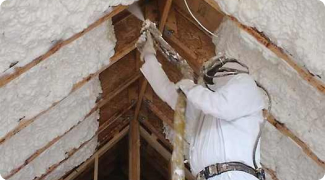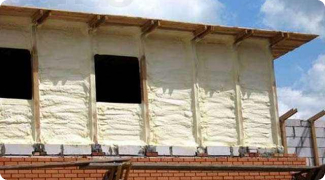
Before making a decision to install or remove old insulation, it is worth finding out about diverse kinds of home protection. The newest insulators are spray foams: open cell and closed cell. They are perfect for walls, basements, and attics to decrease the loss of heat inside of a home. Our company has experienced employees who can do below-mentioned services for you professionally.
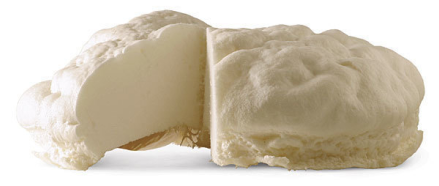
Open Cell Foam Insulation
This type of foam has not completely closed small cells. Open cell is not that much expensive because it contains fewer chemicals. It also is not the most effective air barriers. However, you should also remember, it does not serve as a water vapor barrier. The appearance of the foam is almost sponge-like.
We often put this insulation in the attic or cover interior walls to reduce noise. But our company does not recommend applying it to outdoor applications.
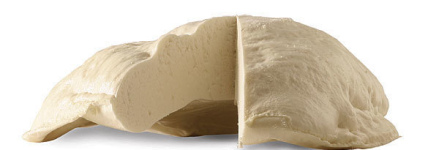
Closed Cell Foam Insulation
Closed cell foam insulation has a higher density than open cell. Its cell structure filled with gas is smaller and more compact. That is why the foam expands becoming a well-functioning air and water vapor barrier. Our workers mainly use it for roofing projects or other outdoor applications.
So, because of strength, higher R-value, and better resistance to air leakage or water vapor, closed cell foam brings more benefits rather than open cell one.
Polyurethane Reaction
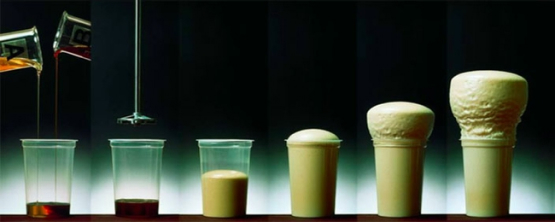
Polyurethane consists mainly of two components: a polyol and isocyanate. When mixing these two components containing catalysts, blowing agents and stabilizers, a reaction mixture is formed, which during the reaction creates polyurethane.
Depending on the formulation and mixing ratio, you can precisely regulate the range of qualities of the polyurethane material. From hard to soft, integral, cellular (foamed) or compact.
Estimated Technical Indicators
Thermal Conductivity
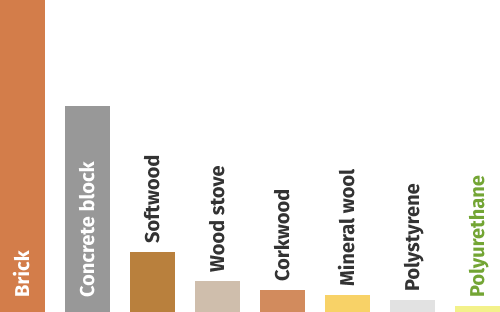
The low coefficient of thermal conductivity of polyurethane foam, just 0.024 W / m ∙ ° C, allows providing the necessary thermal conductivity with minimum thickness.
The thickness of the material depending on the coefficient of thermal conductivity
| Indicators in a dry state | Value |
|---|---|
| Density, kg / m³ | 9-12 |
| Heat conductivity coefficient, W / m ∙ ° С | 0,035 |
| Specific heat capacity, kJ / kg ∙ ° С | 1,47 |
| Indicators in a dry state | Value |
|---|---|
| Heat conductivity coefficient, W / m ∙ ° С | A - 0,037; B - 0,039 |
| Heat absorption coefficient (for a period of 24 hours), W / m² ∙ ° С | A - 42; B - 45 |
| The vapor permeability coefficient, mg / m м h ∙ Pa A, B 0.04 | A - 0,07; B - 0,07 |
| Air permeability coefficient, kg / Pa ∙ m ∙ h A, B 0.0007 | A - 0,01; B - 0,01 |
| Other specifications | Value |
|---|---|
| Humidity, % | 1,3 |
| Sorption humidity, % | 4,4 |
| Compressive strength at 10% deformation, MPa | 1,72 |
| Flexural strength, MPa | Bends |
| Operating temperature range, ° С | -90 to +100 |
Environmental Safety
Based on the sanitary and epidemiological examinations, the sprayed polyurethane foam meets the requirements.